
Abstract
Materials typically undergo phase changes as a function of external parameters such as temperature, pressure or magnetic field. Light can also be used to both switch between equilibrium phases and to create new photo-induced states that may have no equilibrium counterparts. Even though there are fascinating examples of photoinduced phase transitions, the detailed microscopic mechanisms and overarching principles that govern these are still not known. In this talk, I will present two recent examples of this phenomena. First, I will describe how we used ultrashort laser pulses to capture light induced melting and recovery of a charge density wave phase with femtosecond time resolution. During this process, a new state that does not exist in equilibrium is also transiently created. Secondly, I will show experiments in which high field THz pulses are used to induce metastable magnetization in a layered antiferromagnet. Understanding light induced phase transitions could pave the way for optical engineering of new quantum states of matter.
Biography
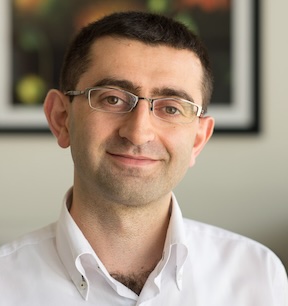 Nuh Gedik joined MIT Physics Department as an assistant professor in January 2008. He received his B.S. in Physics in 1998 from Bogazici University, Istanbul, Turkey and his Ph.D in Physics in 2004 from University of California, Berkeley. After his Ph.D, he moved to Caltech where he worked as a postdoctoral scholar till January 2008. He joined MIT Physics Department as an assistant professor in January 2008 and was later promoted to associate (2013) and full professor (2018). He has received many awards including Sloan Fellowship, National Science foundation (NSF) CAREER, Department of Energy (DOE) Early Career, DARPA Young Faculty Award, Genzel Prize, Moore Experimental Investigator in Quantum Materials and Brown Investigator Award.